
Eyrarvegur 42
- Apr 16
- 3 min read
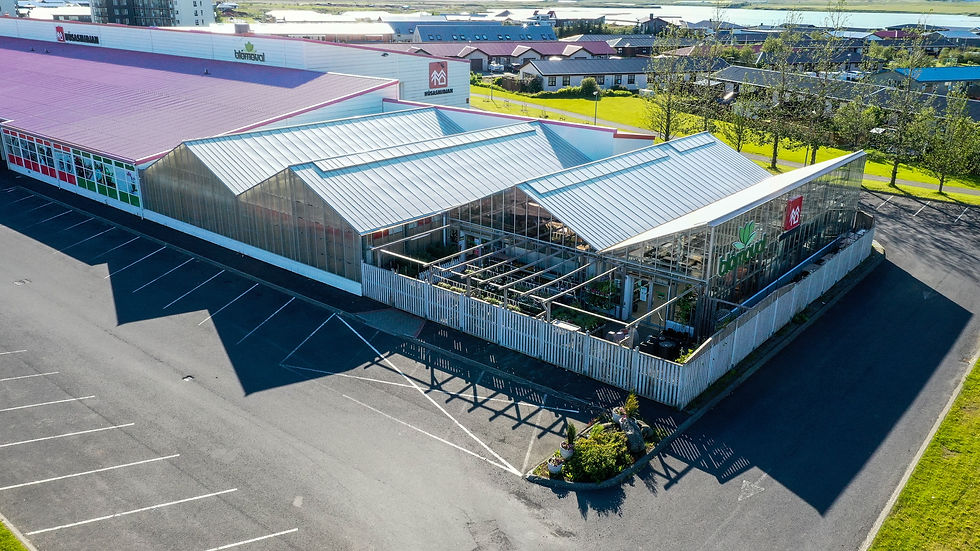
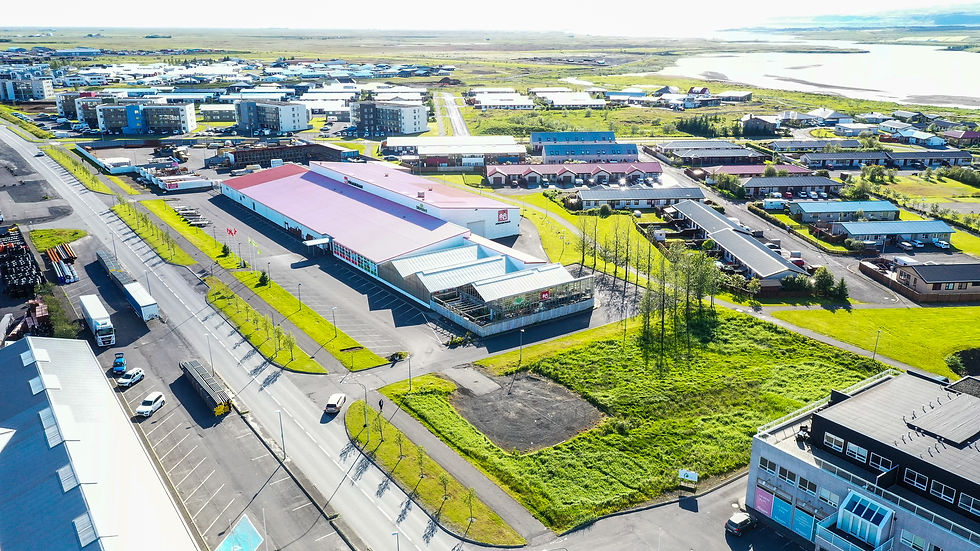
The project at Eyrarvegur 42 in Selfoss is an interesting example of how large real estate companies can implement the circular economy in their projects. When Húsasmiðjan and Blómaval decided to move their operations from the property, it became clear that certain building parts on the site would not be used for new operations and a changed layout of the site. The parts in question were a greenhouse and extension, an extension made of glulam and steel racks where timber had been stored.
Right from the beginning of the project, it was decided to explore alternatives to traditional demolition and disposal, as the materials were quite intact, although they were not suitable for continued use for a store at this location.
Preparation
The basis for the decision was a detailed assessment by an engineering firm of the building volume and condition of the materials. By analyzing the age and reuse possibilities before construction began, it was possible to assess the feasibility of dismantling the building components in a complete manner, transporting them and repurposing them in a new location.

Timelines must match

To find recipients for the greenhouses that needed to be removed, an advertisement was published, including in Bændablaðið and in regional newspapers to reach farmers and contractors in South Iceland. This approach immediately generated a lot of interest, which confirms that there is a demand for used building materials if the information is communicated in the right places. By communicating that EIK wanted to put the greenhouses into continued use, the company subsequently received various other interesting inquiries about other building components than the greenhouses and possible opportunities for material recycling. For example, the idea arose of using steel from racks in a stand for a sports field.
However, it became clear that timing is a key factor in the reuse of building materials. In some cases, such as with a kindergarten that needed material for a shelter, the timelines of demolition and need did not match, which meant that the material was not used for that particular project. If the building materials are to be used, they must be available for immediate collection, or stored in a safe place in the meantime.
Another issue that must be addressed in relation to time is demolition permits and development permits. Obtaining these permits takes time, and all planning work takes time. But with good planning, a lot of preparatory work can be done while waiting for a demolition permit.
Financial benefits
One of the most important lessons for professionals is that the financial benefits of recycling projects rarely lie in the selling price of the material, but in the avoided costs. In the case of the greenhouse, it turned out to be more cost-effective for EIK to pay a party to remove the unit and use it elsewhere than to pay high disposal fees and transport to a landfill.
Although the initial costs of analysis and maintenance were higher, calculations at the end of the project showed that the project yielded net savings when compared to what traditional demolition would have cost.
Key challenges
The project revealed certain obstacles that professionals need to keep in mind:
Demolition methods: A lack of sufficiently detailed instructions during demolition can cause damage to valuable units, as happened in part with the glulam section. The emphasis during demolition must be on preservation, rather than haste.
Permits: A major bottleneck can arise as both a demolition permit at the original site and a development permit at the new site are required. If these processes take a long time, the material can sit unused for months or years, increasing the risk of damage.
Definition of valuables: It is important to define the material in question well. Some items that appear valuable at first glance can be disproportionately expensive to transport and dismantle
Timelines: The timing of demolition and waiting for permits can disrupt the sensitive timelines of recipients, which can make it more difficult to get parties to accept and use the material. Often, parties need the material at a specific time, which does not necessarily coincide with demolition.
Summary
Eik’s experience with Eyrarvegur 42 has shown that a circular approach is viable if it is part of the process from the very beginning. The project was instructive, but ultimately solutions were found that required minimal disposal. The company has also worked on other circular projects, such as the reuse of some of the glass from Smáratorg 3, which was used as a partition at an exhibition and later in Frakkastígur 1.
For professionals in the sector, it is clear that clearer processes for demolition and reuse need to be developed to reduce risk and maximize the environmental and financial benefits that this approach offers.


Comments